



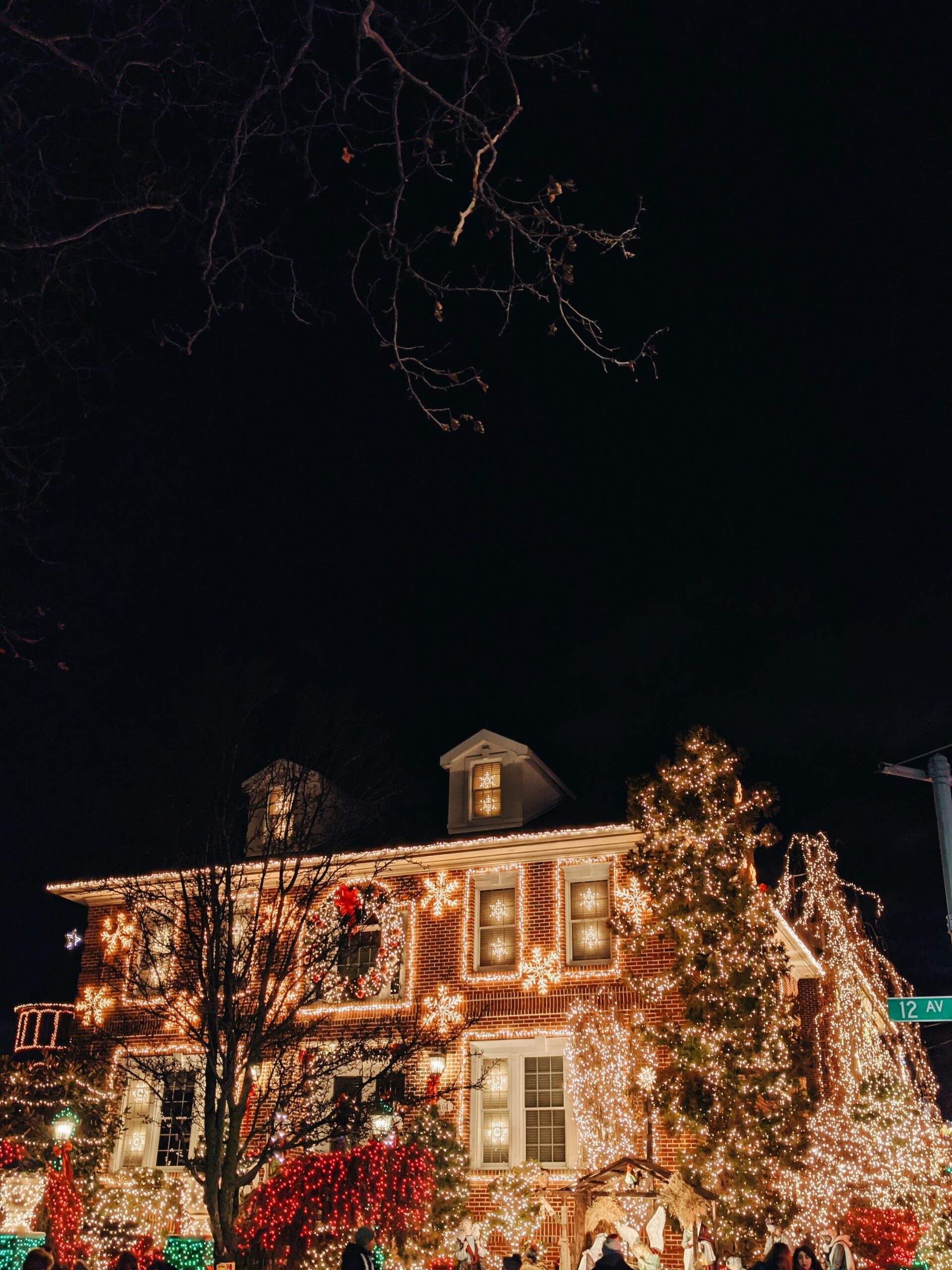
Getting the holiday lights out of storage is one of those small signs that the season has arrived. You untangle a few strands, test the decorations you saved from last year, and start deciding what will go on the porch, in the windows, or around the trees.
Before anything goes up, prepare your holiday lights by taking a closer look at how those lights will be powered. A damaged cord, the wrong extension cable, or an outdoor outlet that isn’t working properly can turn a simple decorating project into an electrical problem.
A few checks before you begin will help you set up your display with fewer surprises.
How Do You Prepare Holiday Lights Safely?
Start by testing and inspecting every strand while it is still on the ground. Check the product labels to make sure each decoration is suitable for its location, use outdoor-rated cords and GFCI-protected power outdoors, and follow the manufacturer’s limits for connecting lights together. When the display is complete, make a habit of turning it off before bed or leaving home.
Most of these checks take only a few minutes. The key is to find potential proble
Seven Checks to Prepare Your Holiday Lights
1. Inspect and test every strand before decorating
Lay out your lights in a dry location where you can see their full length. Look for frayed insulation, cracked sockets, loose plugs, and wires that have been crushed or pinched during storage. Replace damaged products rather than covering a worn spot with tape and putting the strand back into use.
Check that the decorations carry a certification from a recognized testing laboratory, such as UL, ETL, or CSA. Test working strands according to the manufacturer’s instructions before taking them outside. It is much easier to deal with a faulty strand now than after it has been secured to the house.
2. Make sure outdoor lights are actually rated for outdoor use
Indoor decorations are not designed to handle the same exposure as lights placed on a porch, fence, or tree. Read the label or packaging instead of relying on how the product looks.
Outdoor decorations still need protection from avoidable damage. Keep connections out of standing water, use equipment according to its weather-rating instructions, and inspect cords again after severe wind or snow. Disconnect power from a safe, dry location before handling a questionable connection.
3. Choose LEDs and follow the connection limits
LED holiday lights generally draw less power and give off less heat than traditional incandescent strings. That makes them a practical option for decorating larger areas without adding as much electrical demand.
But LED does not mean unlimited. Every product has instructions for how many strands may be linked end to end. Follow that limit, and don’t assume that a power strip creates more capacity on the circuit supplying it.
4. Know where your outdoor lights will plug in
Look at the outlets you plan to use before you hang anything. Outdoor decorations should be connected to GFCI-protected power. GFCIs are designed to shut off electricity when they detect certain faults that can create an electric shock hazard, particularly in damp locations.
If an outlet is damaged, loose, or no longer works, do not use it for your display. And if you have no suitable outdoor power source, avoid running an extension cord through a closed window or door. An electrician can evaluate whether an appropriately located outdoor receptacle is needed.
5. Use extension cords correctly
Choose cords specifically rated for outdoor use and capable of handling the electrical load of the connected decorations. Select a cord long enough for the job rather than connecting several extension cords together.
Keep cords out of walkways, away from sharp edges, and clear of places where doors or windows could pinch them. Never run a cord under a rug or fasten it with nails or staples. Extension cords are temporary equipment, not a substitute for an outlet where you regularly need power.
6. Secure decorations without damaging the wiring
Use mounting clips intended for holiday lights rather than anything that pierces a cord. Avoid stretching strands tightly across corners or leaving them where wind can pull on the connections.
Stay clear of overhead electrical lines, and don’t take risks on ladders, roofs, or icy ground. If a location cannot be reached safely, change the decorating plan instead of forcing it.
7. Turn decorations off when they are unattended
Set a reminder or use a compatible outdoor-rated timer to turn your lights off before you go to sleep or leave the house. That is one less thing to remember during a busy season, and it avoids leaving decorations running unnecessarily.
Why Do Christmas Lights Keep Tripping an Outdoor GFCI?
If your outdoor lights work on a dry evening but shut off after rain or melting snow, the GFCI may be responding to moisture in a plug, connection, or decoration. Damaged wiring can cause similar trouble.
A GFCI trip is not the same thing as a circuit breaker tripping because too many devices are plugged in. The two devices protect against different electrical conditions, which is why identifying what actually shut off matters.
If the GFCI trips repeatedly, disconnect the decorations when it is safe to do so and leave the affected equipment off. Don’t bypass the GFCI, replace it with an unprotected outlet, or keep resetting it to make the lights stay on. An electrician can determine whether the issue is the decorations, receptacle, or connected circuit.
When an Outdoor Outlet Needs an Electrician
Sometimes the problem isn’t the light strand at all. You might find that a receptacle doesn’t work, the outlet cover is broken, or the only available power source requires a long cord across the yard.
These are good reasons to have the electrical setup evaluated before decorating. Depending on what is found, the right next step may be outlet repair or installation, GFCI protection, or electrical troubleshooting. An outlet repair is not the same thing as replacing an entire electrical panel, and a proper evaluation should establish what work is actually needed.
JDV Electric does not hang or install temporary holiday light displays. We do help homeowners in Delaware and Chester Counties address the electrical outlets, circuits, and related problems that can affect outdoor decorating.
Holiday Light Safety FAQs
Can I use indoor Christmas lights outside?
No. Use only decorations specifically labeled for outdoor use in locations exposed to weather. Indoor-only lights may not have the protection needed for moisture and changing conditions.
How many Christmas light strands can I connect together?
Follow the manufacturer’s limit for the particular lights you own. The safe number varies by product and can differ significantly between LED and incandescent strands. Don’t use a single rule for every light set.
Why do my outdoor lights go out only when it rains?
Moisture can contribute to a ground fault that causes a GFCI to trip. A damaged strand or connection may also be involved. Stop using the affected equipment if the problem keeps happening and have the electrical issue checked.
Can I run holiday lights from an extension cord?
Yes, when the cord is appropriately rated, in good condition, and used temporarily according to the product instructions. For outdoor decorating, use an outdoor-rated cord with GFCI protection and never connect extension cords to each other.
Should holiday lights stay on overnight?
Turn decorative lights off before sleeping or leaving home. A compatible timer can make that routine easier.
Get the Power Setup Right Before You Decorate
Putting up holiday lights should be about enjoying the display, not tracking down a dead outdoor outlet or wondering why the power keeps cutting out. Checking the lights, cords, and receptacles first can save you trouble once the decorations are in place.
If an outdoor outlet isn’t working, a GFCI won’t stay on, or you need a safer permanent location for outdoor power, JDV Electric can help identify the right electrical work for your home.
Contact JDV Electric to discuss outdoor outlet or electrical troubleshooting service. We serve homeowners throughout Delaware and Chester Counties, Pennsylvania. Call (610) 364-5099 to discuss the issue and available appointment times.